A flooded basement doesn't wait for business hours, and neither do we. Aqua Guard Water Damage keeps trucks staged around Hinckley so a licensed technician can be pulling standing water within the hour, not scheduling you for next Tuesday.
Call +1-844-234-5373 Now
Aqua Guard Water Damage built its Hinckley operation around one standard: arrive fast, document everything with moisture readings and thermal imaging, and communicate the drying plan in plain language before we touch a single wall.
We answer our own phones around the clock in Hinckley, which means the person who books your appointment already knows our schedule, our crew availability, and how fast we can realistically get a truck to your address.
We invest in ongoing training as drying standards and equipment evolve, rather than treating a technician's initial certification as the finish line.

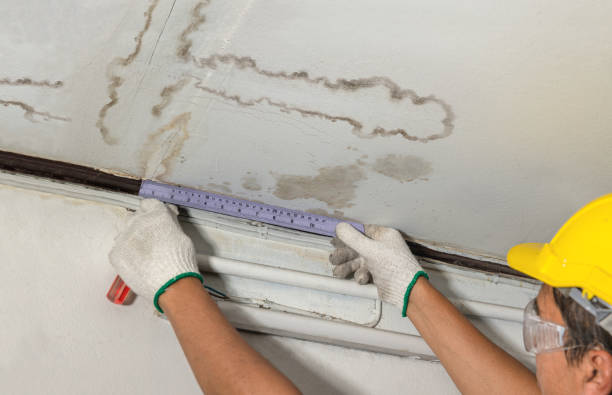
Ceiling stains near a bathroom or kitchen almost always trace back to a plumbing failure rather than a roof leak, which means the source is often closer and easier to fix than homeowners assume.
If opening windows and running a fan doesn't clear the smell within a day, the moisture source is still active and needs professional extraction, not just ventilation. A smell that returns after cleaning is a strong sign the moisture is still present.
Tile that suddenly sounds hollow when you tap it often means the mortar bed underneath has been sitting in moisture long enough to lose adhesion. That hollow sound rarely resolves on its own.
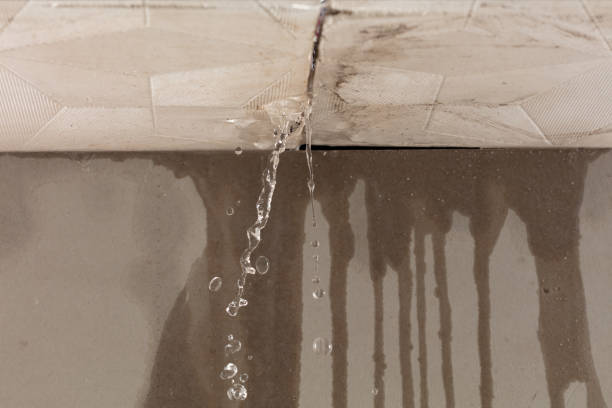
A running-water sound when every fixture in the house is off is a strong sign of a hidden leak feeding your rising bill.
Paint that bubbles or peels away from a wall, especially near baseboards, usually means moisture is pushing through from behind rather than a simple application problem.
Any visible mold, even a small patch in a corner or along a baseboard, means conditions behind that surface have supported growth for a while and the moisture source needs to be found, not just the mold wiped away.
Our Flood Damage Repair process covers every stage of a water loss, from the first extraction pass to the final coat of paint, so you're never left coordinating separate contractors mid-project.
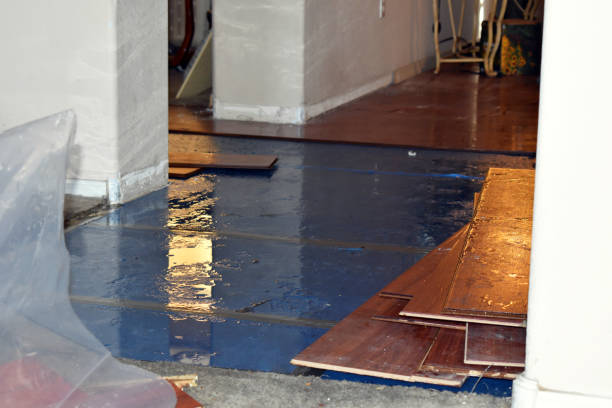
We prioritize extraction speed above everything else in the first hour, because every additional hour standing water sits raises the odds of secondary damage to subfloors and framing.
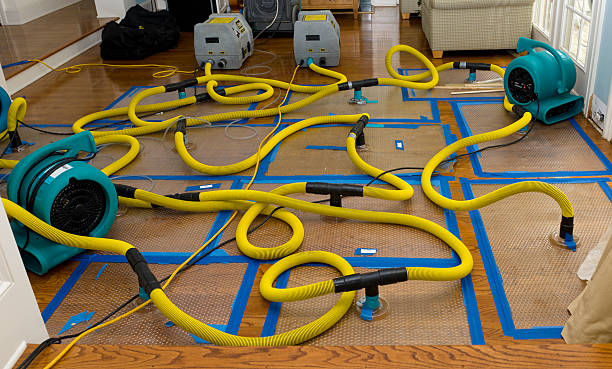
Equipment placement isn't guesswork; it's calculated from psychrometric readings taken at the start of the job and adjusted daily as conditions change.
Our sewage cleanup protocol follows IICRC S500 contamination standards, isolating the affected area, removing unsalvageable materials, and disinfecting every surface that had contact with blackwater.
If mold has already taken hold, our containment and remediation process isolates the affected zone with negative air pressure before any demolition begins, keeping spores from spreading to unaffected rooms.
Once the structure tests dry, our reconstruction team handles drywall, insulation, flooring, and trim so you're not managing a second contractor after the restoration crew leaves.
Furniture, documents, and electronics affected by water intrusion get assessed on-site, with salvageable items cleaned and stored while unsalvageable items are documented for your claim.


Dispatch asks enough to prep the right equipment before the truck even leaves, so the crew isn't guessing what they'll find on arrival.
The assessment sets the entire plan — skipping it or rushing it is how jobs end up with hidden moisture pockets months later.
Extraction and drying run as one continuous process rather than two separate visits, which keeps the timeline tighter.
Final verification is where a lot of shortcuts get taken industry-wide — we treat it as mandatory, not optional.
Every technician carries IICRC certification and our crews are fully insured for your protection on every job.
Local staging means shorter drive times, which matters most in the first hour after a water loss.
We'd rather explain the cost clearly upfront than have that conversation after the job is already underway.
If a drying target isn't met on the first pass, we extend equipment placement at no extra charge until moisture readings confirm the structure is dry.
Every job closes with documented moisture verification, because a guarantee that isn't backed by data isn't much of a guarantee.
That same standard applies whether it's a single flooded bathroom or a full commercial loss — the sign-off criteria don't change based on job size.
Call +1-844-234-5373Whether your address falls in 44233 or one of the neighboring zip codes we cover, the same crew and the same response standard applies.
We track call volume by zip code across Hinckley to keep crew staffing matched to where emergencies actually happen most often.

"The team here in Hinckley treated our emergency like it actually mattered, not like another ticket in a queue, and the drying documentation they left us was thorough enough to hand straight to our insurer."
James R., Hinckley"They caught mold starting behind our drywall before it spread and contained it properly instead of just painting over the problem like a previous contractor did."
Denise M., Hinckley"Professional from the first phone call to the final walkthrough. They re-tested moisture levels before closing the job instead of just eyeballing it."
Marcus T., Hinckley"Every question I asked got a straight answer, even the ones about cost, which is rare after dealing with two other contractors who kept dodging the pricing conversation."
Priya S., Hinckley"We had a slow leak we didn't notice for weeks and the crew found moisture in places we never would have checked using thermal imaging."
Carlos V., Hinckley"Coordinating a commercial job around our operating hours could have been a nightmare, but their crew worked around our schedule without us having to ask twice."
Angela F., Hinckley"A cracked supply line under the kitchen sink went unnoticed for days and by the time we called, the subfloor was saturated. The crew pulled the damaged material and had drying equipment running within the hour."
Tyrone B., Hinckley"Storm runoff got into our crawl space and the smell alone told us something was wrong. The crew found the vapor barrier had failed and fixed the actual cause, not just the symptom."
Wendy K., Hinckley